Outschool
Building Belonging on Outschool
My role
Design lead
Team
Product manager
Product researcher
5 engineers
Timeline
Jul - Sep 2021
Outschool is an education platform that offers online classes for K12 learners. Learners are naturally curious and often homeschooled, so classroom socialization matters.
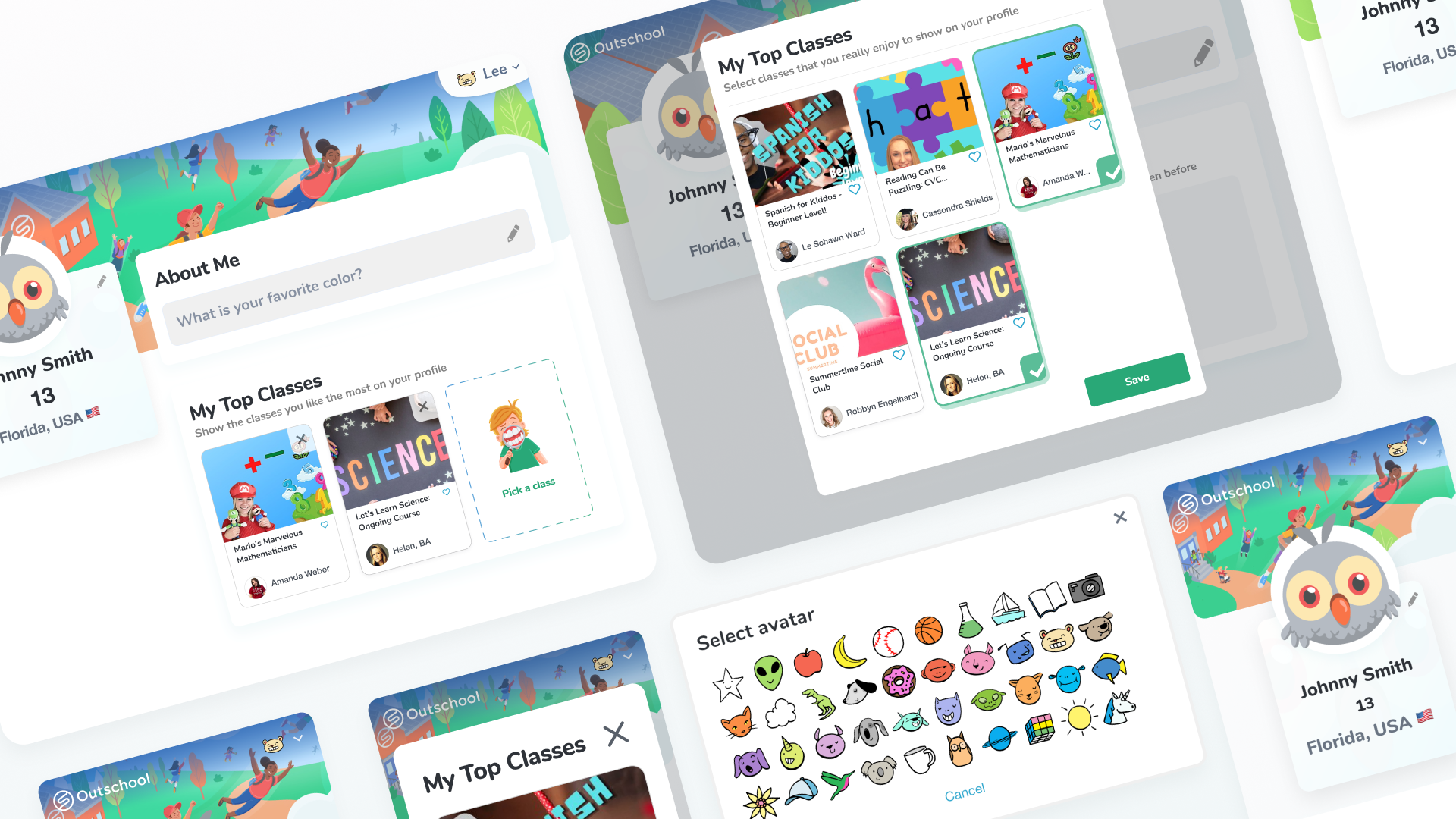
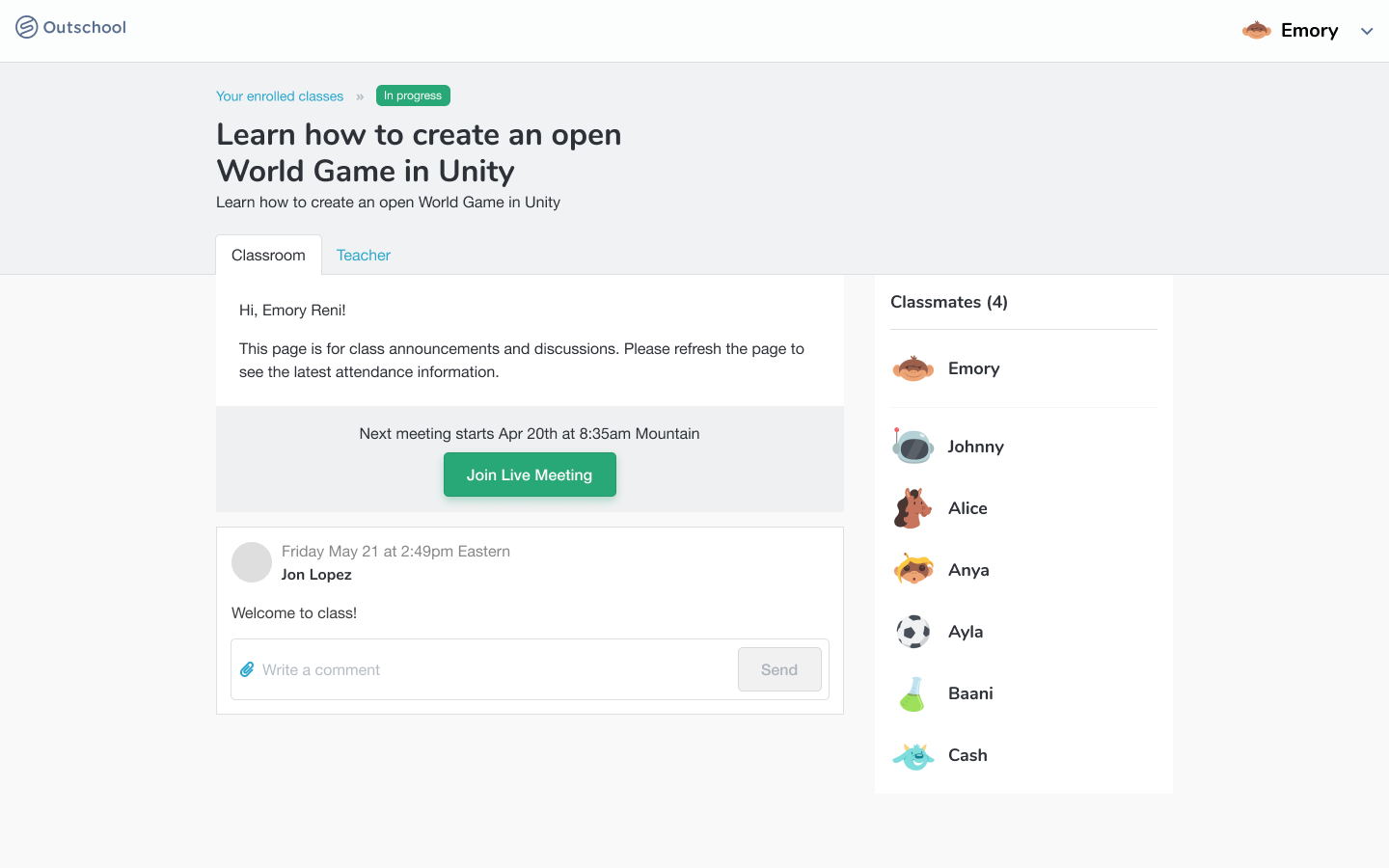
Before introducing Outschool Learner profile, learners could only see names and avatars of peers through their parents’ view. We needed a safe, learner-first way for students to express themselves and connect — while respecting privacy and child safety.
Profile was launched in Q4 2021 with high engagements.
20K
Awareness, goal was 4k.
28%
Success usage, goal was 10%
6.5K
Engagement, goal was 2.5k
Design Principles
Designing for learners is complex because different age groups have distinct goals and behaviors. For example, for age 6 to 8, self-expression is more important than socializing. Experiences need to be simple, playful, and clear, with minimal friction. This understanding directly informed our design principles:
Privacy
Profiles visible only to classmates and teachers
Emotionally safe
Avoid designing patterns that promote social comparison: counts, upvotes, and likes
Simple setup
Designed for ages 7+ to navigate easily and independently
The Process
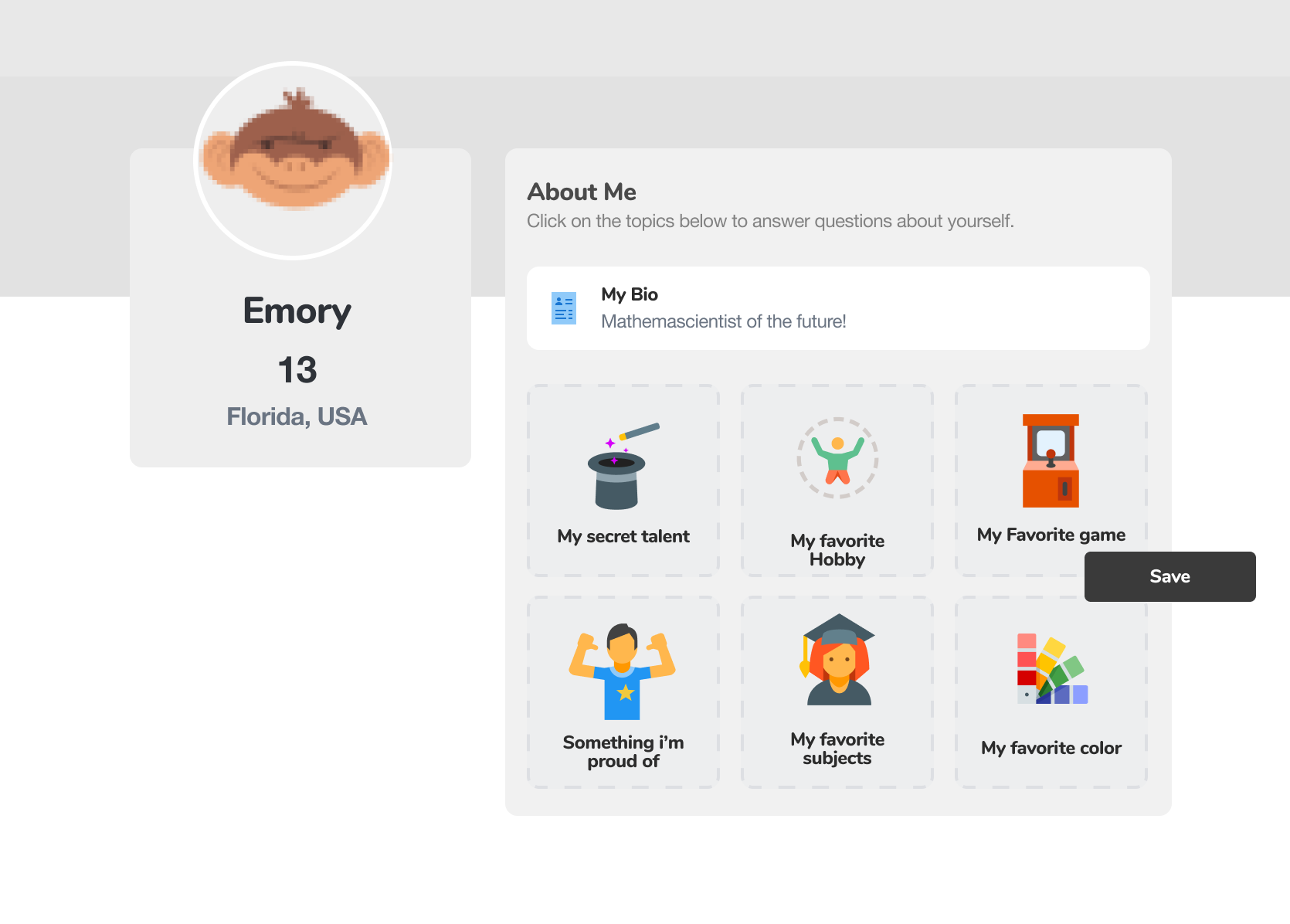
We started by exploring how kids actually want to share who they are. Three early concepts helped us frame the right balance between self-expression and safety:
Trivia
PRO
- Act as prompts to help learners come up with things to write about
- Gamify the experience
CON
- Had to figure out the right prompts
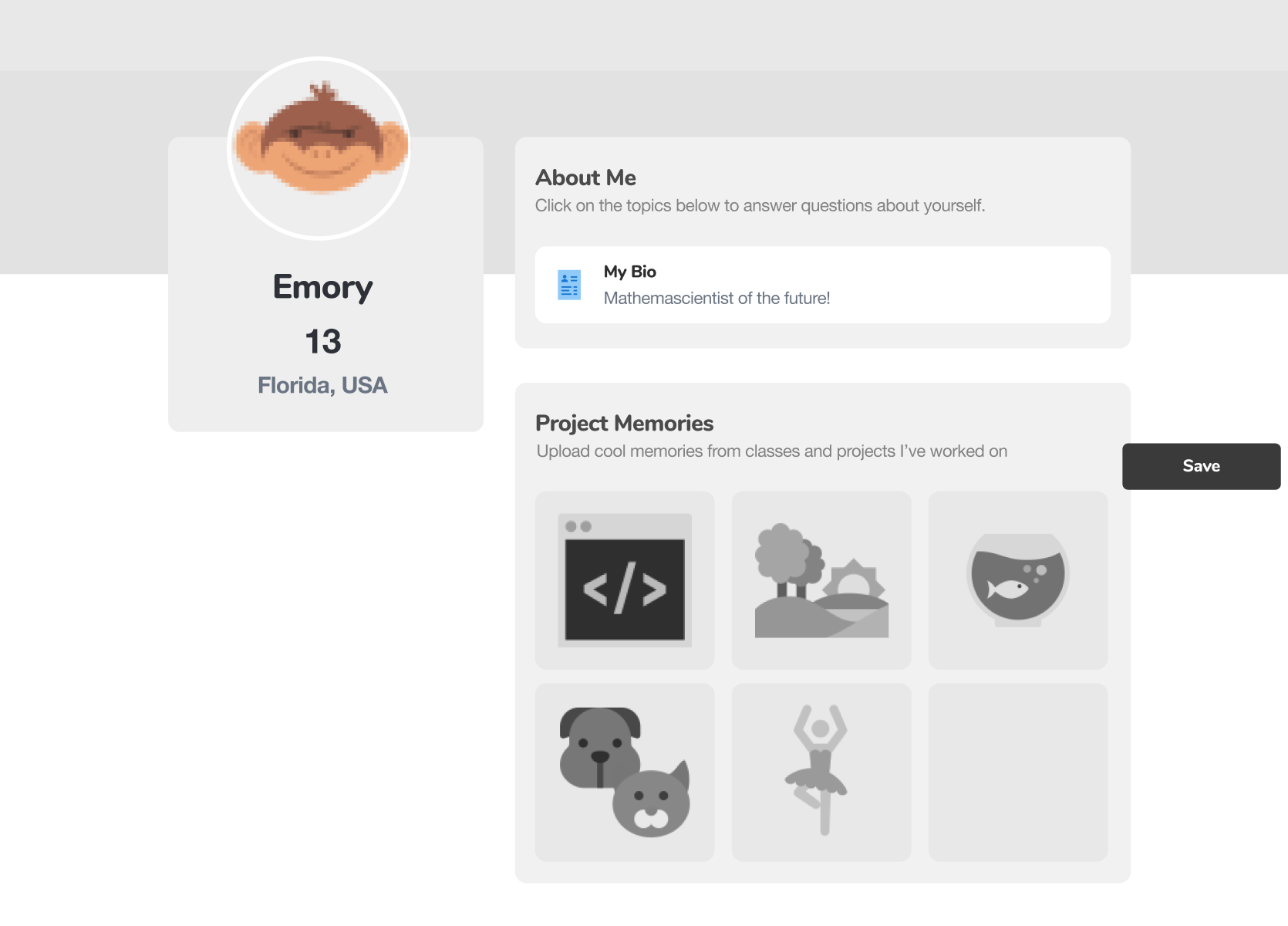
Project memories
PRO
- Show and tell
- Form connections with others via shared project ideas and memories
CON
- Sharing personal information
- Content moderation needs
- Add technical scope
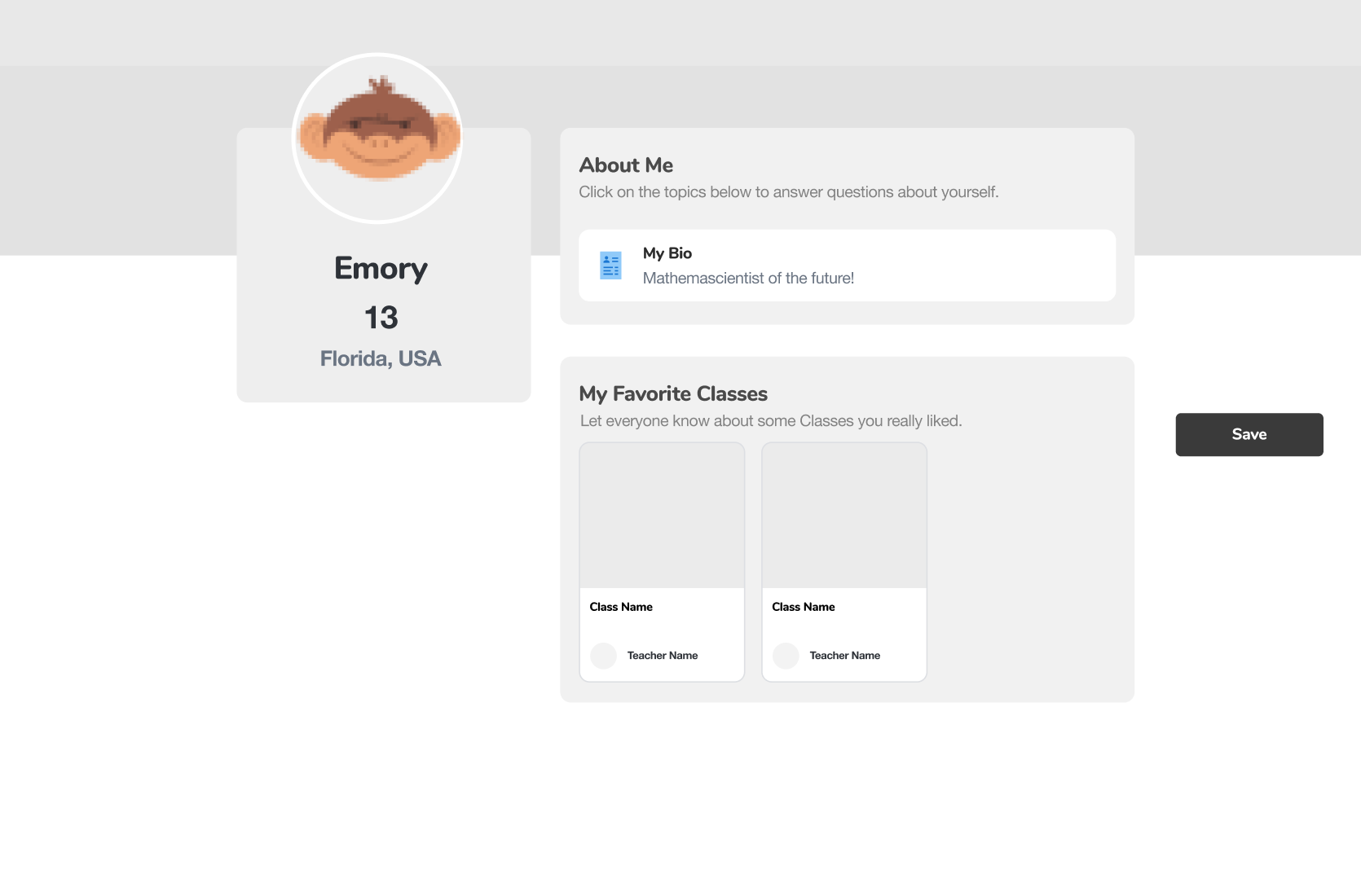
My favorite classes
PRO
- Encourage learners to follow similar learners to new classes
- Add business value to Outschool
CON
- Limited self expression of interests
Through co-design sessions with 12 learners (ages 8–12), we learned:
- Kids wanted simple profiles, inspired by familiar apps like Discord
- They were curious about classes others had taken
- They were surprisingly excited about customizing avatars, even when not prompted
These insights led us to strip away complexity and focus on authentic, lightweight connection.
Final design
Awareness
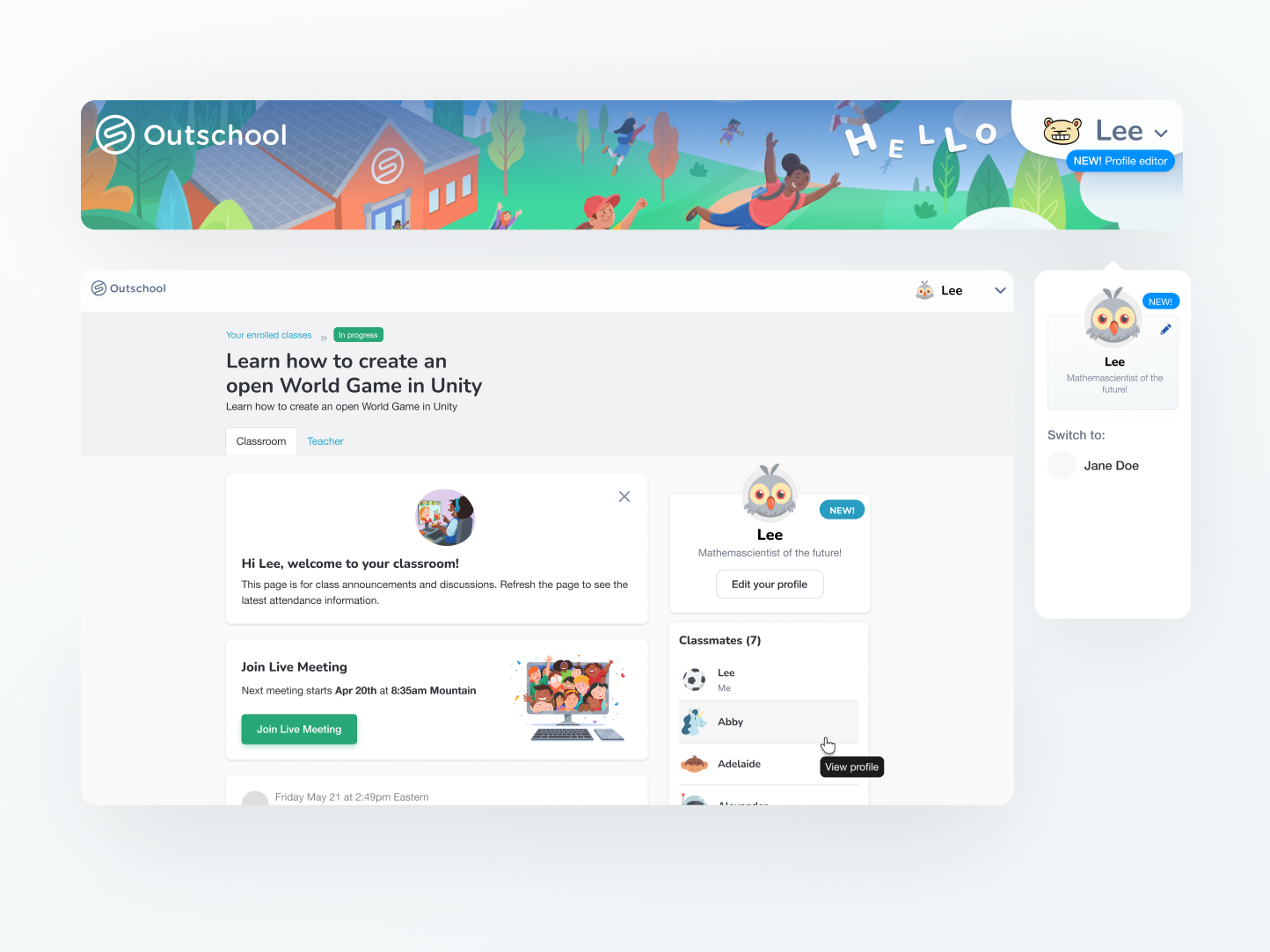
In-product, we used several simple ways to really help learners find the profile page and view others.
Start with simple content
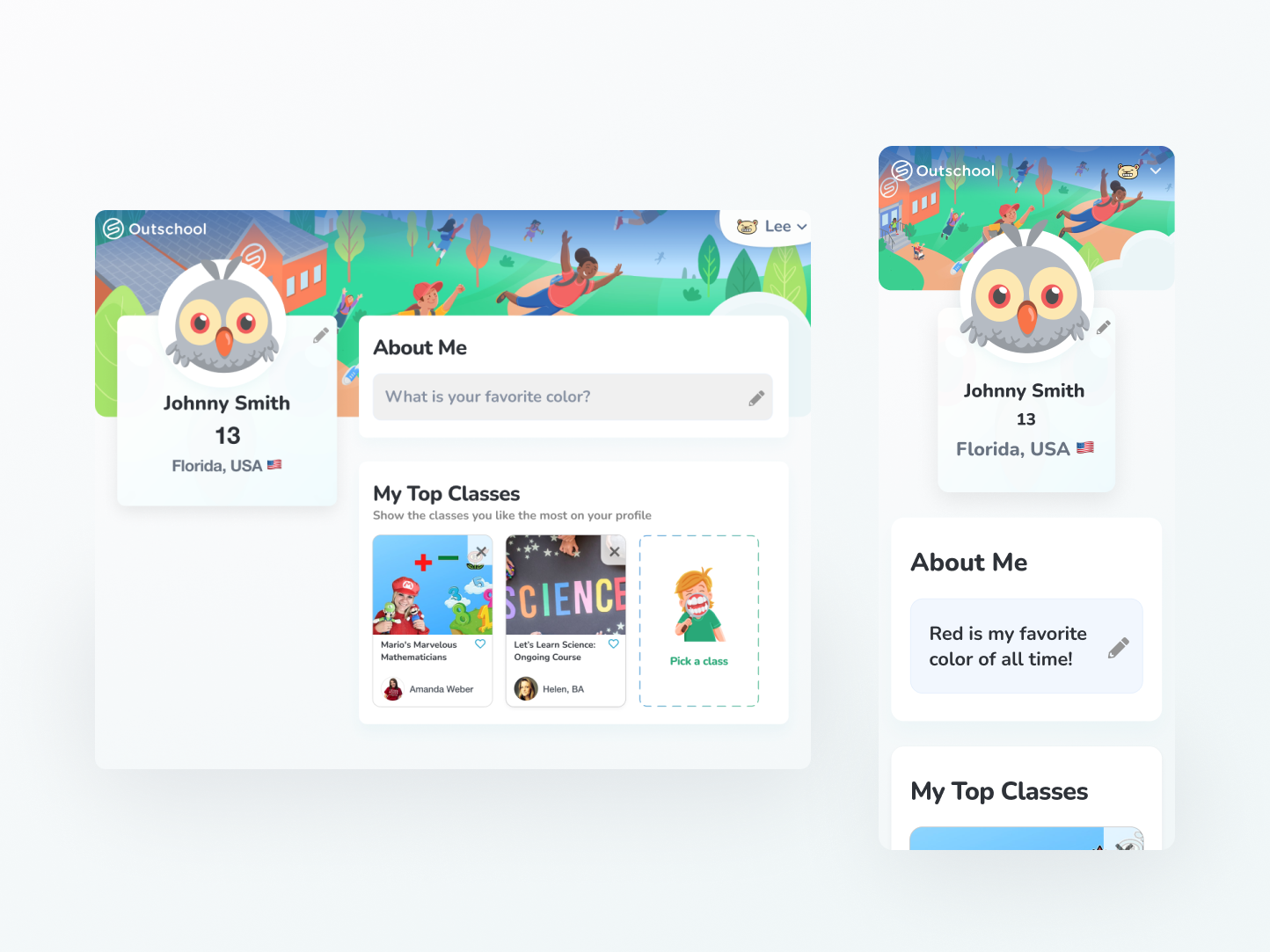
From research, we learned that learners expect profiles to be simple and actionable. First name, age, location, and avatar selection would be enough for learners to reasonably identify/recognize other learners.
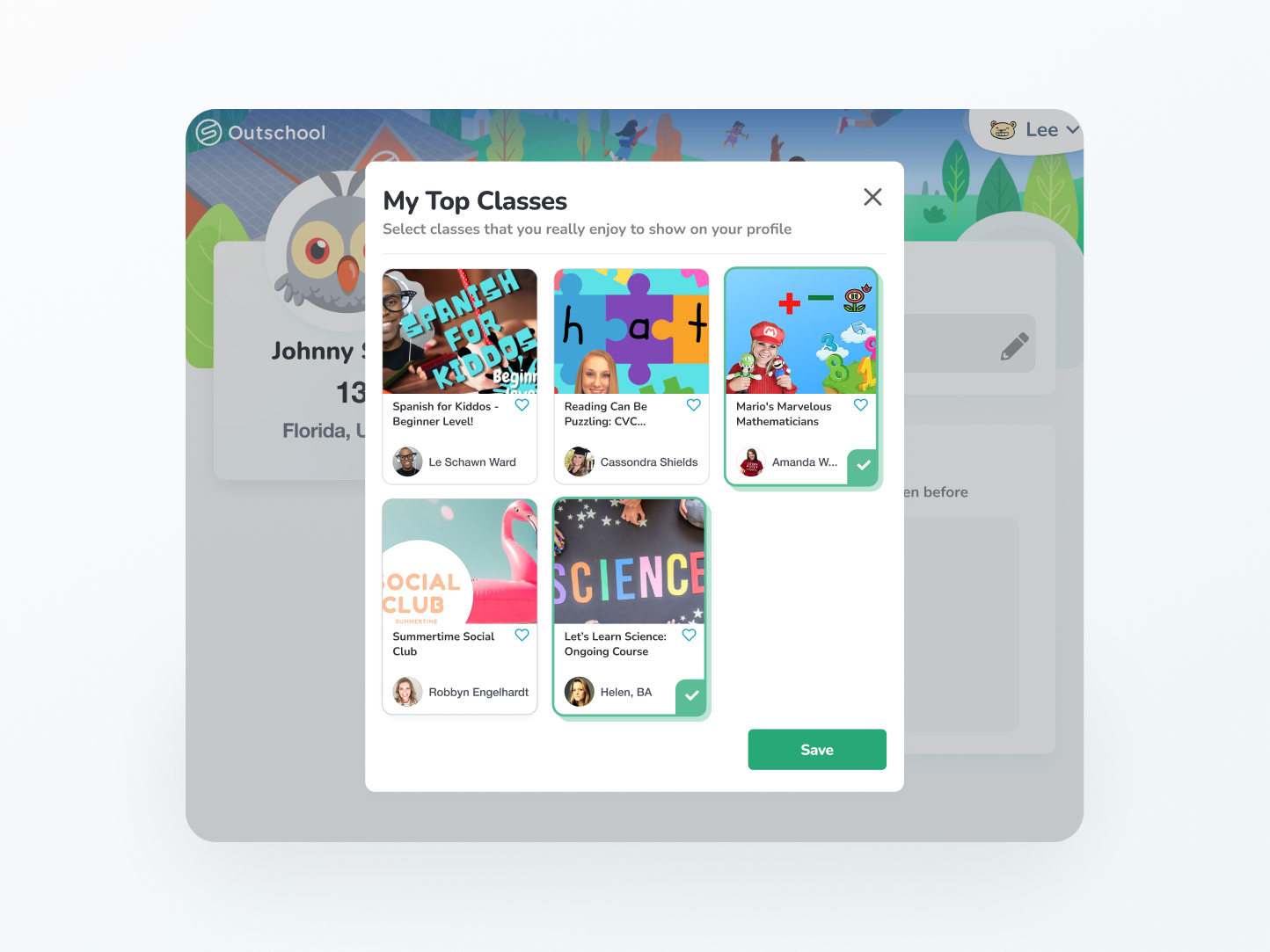
Taking classes with friends
Even when we didn’t show “classes” on an initial prototype, some learners (and their parents) mentioned this would be nice to have. From a business standpoint, including classes in learner profile would increase class re-enrollment.
Avatar customization
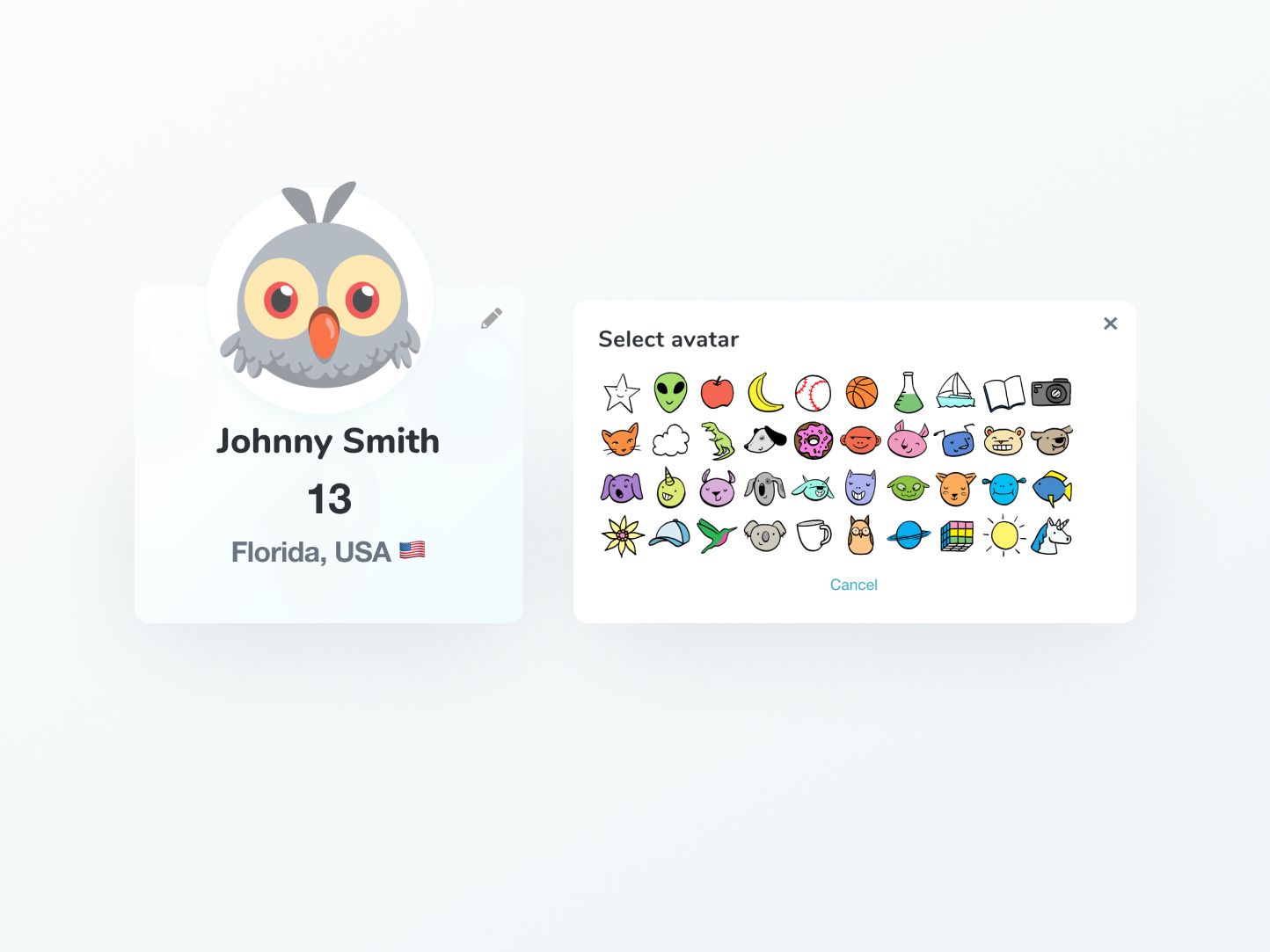
We also realized that learners were interested in changing their avatars inside their profiles. Currently, learners can only change their avatar through their parent’s accounts. Even when we didn’t show avatar selection in the initial prototype, learners suggested this feature to us.
Key learnings
This 0→1 initiative taught me how to design for social connection through empathy and constraint.
- By balancing safety, simplicity, and emotional resonance, I helped turn a feature into a meaningful part of the learning experience.
- Through quick discovery cycles and tight collaboration with design, research, PM, and engineering, we shipped something that not only hit every success metric — but helped learners feel seen in a virtual world.
Made with 🤍 in Toronto
© Kira Xie 2025 All Rights Reserved
Outschool
Building Belonging on Outschool
My role
Design lead
Team
Product manager
Product researcher
5 engineers
Timeline
Jul - Sep 2021
Outschool is an education platform that offers online classes for K12 learners. Learners are naturally curious and often homeschooled, so classroom socialization matters.
Before introducing Outschool Learner profile, learners could only see names and avatars of peers through their parents’ view. We needed a safe, learner-first way for students to express themselves and connect — while respecting privacy and child safety.
Profile was launched in Q4 2021 with high engagements.
20K
Awareness, goal was 4k.
28%
Success usage, goal was 10%
6.5K
Engagement, goal was 2.5k
Design Principles
Designing for learners is complex because different age groups have distinct goals and behaviors. For example, for age 6 to 8, self-expression is more important than socializing. Experiences need to be simple, playful, and clear, with minimal friction. This understanding directly informed our design principles:
Privacy
Profiles visible only to classmates and teachers
Emotionally safe
Avoid designing patterns that promote social comparison: counts, upvotes, and likes
Simple setup
Designed for ages 7+ to navigate easily and independently
The Process
We started by exploring how kids actually want to share who they are. Three early concepts helped us frame the right balance between self-expression and safety:
Trivia
PRO
- Act as prompts to help learners come up with things to write about
- Gamify the experience
CON
- Had to figure out the right prompts
Project memories
PRO
- Show and tell
- Form connections with others via shared project ideas and memories
CON
- Sharing personal information
- Content moderation needs
- Add technical scope
My favorite classes
PRO
- Encourage learners to follow similar learners to new classes
- Add business value to Outschool
CON
- Limited self expression of interests
Through co-design sessions with 12 learners (ages 8–12), we learned:
- Kids wanted simple profiles, inspired by familiar apps like Discord
- They were curious about classes others had taken
- They were surprisingly excited about customizing avatars, even when not prompted
These insights led us to strip away complexity and focus on authentic, lightweight connection.
Final design
Awareness
In-product, we used several simple ways to really help learners find the profile page and view others.
Start with simple content
From research, we learned that learners expect profiles to be simple and actionable. First name, age, location, and avatar selection would be enough for learners to reasonably identify/recognize other learners.
Taking classes with friends
Even when we didn’t show “classes” on an initial prototype, some learners (and their parents) mentioned this would be nice to have. From a business standpoint, including classes in learner profile would increase class re-enrollment.
Avatar customization
We also realized that learners were interested in changing their avatars inside their profiles. Currently, learners can only change their avatar through their parent’s accounts. Even when we didn’t show avatar selection in the initial prototype, learners suggested this feature to us.
Key learnings
This 0→1 initiative taught me how to design for social connection through empathy and constraint.
- By balancing safety, simplicity, and emotional resonance, I helped turn a feature into a meaningful part of the learning experience.
- Through quick discovery cycles and tight collaboration with design, research, PM, and engineering, we shipped something that not only hit every success metric — but helped learners feel seen in a virtual world.
Made with 🤍 in Toronto
© Kira Xie 2025 All Rights Reserved
Outschool
Building Belonging on Outschool
My role
Design lead
Team
Product manager
Product researcher
5 engineers
Timeline
Jul - Sep 2021
Outschool is an education platform that offers online classes for K12 learners. Learners are naturally curious and often homeschooled, so classroom socialization matters.
Before introducing Outschool Learner profile, learners could only see names and avatars of peers through their parents’ view. We needed a safe, learner-first way for students to express themselves and connect — while respecting privacy and child safety.
Profile was launched in Q4 2021 with high engagements.
20K
Awareness, goal was 4k.
28%
Success usage, goal was 10%
6.5K
Engagement, goal was 2.5k
Design Principles
Designing for learners is complex because different age groups have distinct goals and behaviors. For example, for age 6 to 8, self-expression is more important than socializing. Experiences need to be simple, playful, and clear, with minimal friction. This understanding directly informed our design principles:
Privacy
Profiles visible only to classmates and teachers
Emotionally safe
Avoid designing patterns that promote social comparison: counts, upvotes, and likes
Simple setup
Designed for ages 7+ to navigate easily and independently
The Process
We started by exploring how kids actually want to share who they are. Three early concepts helped us frame the right balance between self-expression and safety:
Trivia
PRO
- Act as prompts to help learners come up with things to write about
- Gamify the experience
CON
- Had to figure out the right prompts
Project memories
PRO
- Show and tell
- Form connections with others via shared project ideas and memories
CON
- Sharing personal information
- Content moderation needs
- Add technical scope
My favorite classes
PRO
- Encourage learners to follow similar learners to new classes
- Add business value to Outschool
CON
- Limited self expression of interests
Through co-design sessions with 12 learners (ages 8–12), we learned:
- Kids wanted simple profiles, inspired by familiar apps like Discord
- They were curious about classes others had taken
- They were surprisingly excited about customizing avatars, even when not prompted
These insights led us to strip away complexity and focus on authentic, lightweight connection.
Final design
Awareness
In-product, we used several simple ways to really help learners find the profile page and view others.
Start with simple content
From research, we learned that learners expect profiles to be simple and actionable. First name, age, location, and avatar selection would be enough for learners to reasonably identify/recognize other learners.
Taking classes with friends
Even when we didn’t show “classes” on an initial prototype, some learners (and their parents) mentioned this would be nice to have. From a business standpoint, including classes in learner profile would increase class re-enrollment.
Avatar customization
We also realized that learners were interested in changing their avatars inside their profiles. Currently, learners can only change their avatar through their parent’s accounts. Even when we didn’t show avatar selection in the initial prototype, learners suggested this feature to us.
Key learnings
This 0→1 initiative taught me how to design for social connection through empathy and constraint.
- By balancing safety, simplicity, and emotional resonance, I helped turn a feature into a meaningful part of the learning experience.
- Through quick discovery cycles and tight collaboration with design, research, PM, and engineering, we shipped something that not only hit every success metric — but helped learners feel seen in a virtual world.
Made with 🤍 in Toronto
© Kira Xie 2025 All Rights Reserved